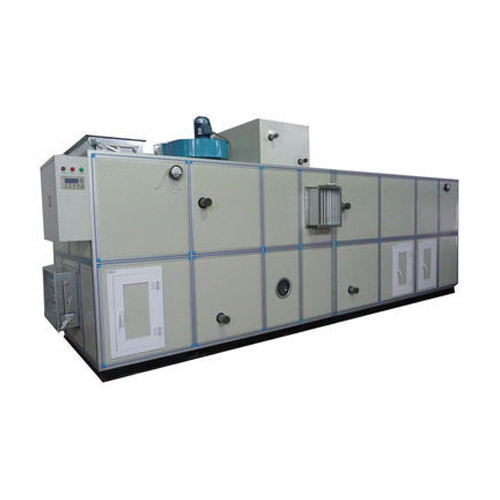
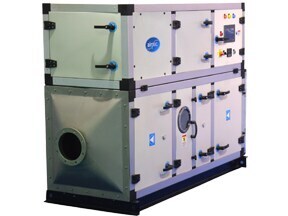
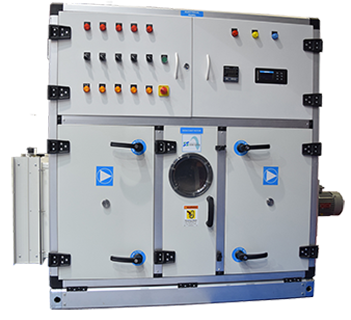
An air handling system with a dehumidifier is designed to control both temperature and humidity levels in indoor environments. Here's an overview of how it works and its benefits:
Functionality: An air handling unit (AHU) with a dehumidifier is a comprehensive system that conditions the air by cooling it to remove moisture, then reheating it to achieve the desired temperature. This process helps maintain a comfortable and healthy indoor environment.
Components:Dehumidifier: The dehumidifier removes excess moisture from the air, typically using refrigeration or desiccant technology.
Cooling Coil: The cooling coil helps lower the temperature of the air, causing moisture in the air to condense and be removed.
Heating Coil: The heating coil reheats the air to the desired temperature after it has been dehumidified.
Filters: Air filters remove particles and contaminants from the air, ensuring it is clean and healthy to breathe.
Fan: The fan circulates the air through the system, ensuring even distribution of conditioned air throughout the building.
Benefits:
Improved Comfort: By controlling both temperature and humidity levels, an air handling system with a dehumidifier provides a more comfortable indoor
environment.
Healthier Indoor Air Quality: Removing excess moisture helps prevent the growth of mold, mildew, and dust mites, which can improve indoor air quality and reduce the risk of respiratory problems.
Energy Efficiency: Modern air handling units are designed to be energy-efficient, helping you save on energy costs while maintaining optimal indoor conditions.
Customizable Solutions: Air handling systems with dehumidifiers can be customized to suit the specific needs of different environments, such as residential, commercial, or industrial spaces.
Overall, an air handling system with a dehumidifier is an effective solution for maintaining a comfortable and healthy indoor environment by controlling both temperature and humidity levels.
AHU WITH DEHUMIDIFIER FOR PROCESS SYSTEMS (FBD, COATER MACHINES)
An air handling unit (AHU) with a dehumidifier is a valuable addition to process systems like Fluid Bed Dryers (FBDs), coaters, and other machines where controlling humidity is critical. Here's how it can benefit such systems:
Moisture Control: FBDs and coaters often require precise humidity control to ensure optimal product quality and processing conditions. An AHU with a dehumidifier can help maintain the required humidity levels, preventing issues like caking, sticking, or uneven drying.
Temperature Regulation: AHUs can also help regulate the temperature in process areas, ensuring that the environment remains within the desired range for efficient operation and product quality.
Clean Air Supply: AHUs equipped with filters can provide a clean air supply to process systems, preventing contamination and maintaining product integrity.
Energy Efficiency: Modern AHUs are designed to be energy-efficient, helping to reduce operating costs while maintaining optimal process conditions.
Customizable Solutions: AHUs can be customized to suit the specific requirements of different process systems, ensuring compatibility and efficiency.
Overall, an AHU with a dehumidifier can enhance the performance and efficiency of process systems like FBDs, coaters, and machines by providing precise humidity and temperature control, clean air supply, and energy efficiency.
DEHUMIDIFIER MODULE FOR AIR HANDLING SYSTEM
A dehumidifier module for an air handling system is a component that is added to an existing AHU to remove excess moisture from the air. Here's how it works and its benefits:
Functionality: The dehumidifier module is integrated into the AHU and works in conjunction with the cooling coil. It removes moisture from the air by passing it over a cooled surface, causing the moisture to condense and be collected or drained away.
Benefits: Improved Indoor Air Quality: By removing excess moisture, the dehumidifier module helps prevent the growth of mold, mildew, and bacteria, improving indoor air quality.
Comfort: Maintaining optimal humidity levels can help improve comfort levels in the building, reducing the risk of health issues such as respiratory problems and allergies.
Energy Efficiency: By removing moisture from the air, the dehumidifier module can help the cooling coil operate more efficiently, reducing energy consumption.
Protection of Equipment: Maintaining proper humidity levels can help protect equipment and machinery from corrosion and other damage caused by excess moisture.
Types of Dehumidifier Modules:
Refrigerative Dehumidifiers: These dehumidifiers use a refrigeration cycle to cool the air and remove moisture.
Desiccant Dehumidifiers: These dehumidifiers use a desiccant material to absorb moisture from the air, which is then removed or regenerated.
Applications:
Dehumidifier modules are commonly used in buildings where maintaining proper humidity levels is critical, such as hospitals, laboratories, and manufacturing facilities.
They can also be used in conjunction with HVAC systems to improve comfort and indoor air quality in commercial and residential buildings.
Overall, a dehumidifier module for an air handling system can be a valuable addition to improve indoor air quality, comfort, and energy efficiency in buildings where excess moisture is a concern.
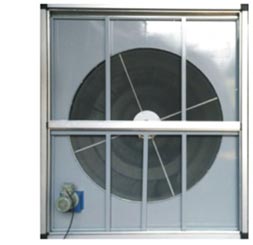
HEAT RECOVERY WHEEL FOR AIR HANDLING SYSTEM
A heat recovery wheel is a component of an air handling system (AHU) that is used to recover heat from the exhaust air stream and transfer it to the incoming fresh air stream. Here's how it works and its benefits:
Functionality: The heat recovery wheel consists of a rotating wheel made of a material with high thermal conductivity, such as aluminum or polymer. As the wheel rotates, it passes through the exhaust air stream, where it absorbs heat. It then rotates through the incoming fresh air stream, transferring the heat to the fresh air before it enters the building.
Benefits:Energy Efficiency: By recovering heat from the exhaust air, the heat recovery wheel helps reduce the energy required to heat the incoming fresh air, leading to energy savings.
Improved Indoor Air Quality: The heat recovery wheel helps maintain a balanced and controlled indoor environment by providing fresh, pre-conditioned air to the building.
Cost Savings: The energy savings achieved by using a heat recovery wheel can lead to lower operating costs over time.
Environmental Benefits: By reducing the energy consumption of the HVAC system, the heat recovery wheel can help reduce the building's carbon footprint.
Types of Heat Recovery Wheels:Sensible Heat Recovery Wheels: These wheels transfer only the sensible heat (temperature) from the exhaust air to the fresh air.
Total Heat Recovery Wheels: These wheels transfer both sensible and latent heat (moisture) from the exhaust air to the fresh air, helping to maintain proper humidity levels in the building.
Applications:
Heat recovery wheels are commonly used in commercial and industrial buildings where there is a need to reduce energy consumption and maintain indoor air quality.
They can also be used in conjunction with other HVAC systems, such as rooftop units or air handling units, to improve their efficiency.
Overall, a heat recovery wheel is a highly efficient component of an air handling system that can help reduce energy consumption, improve indoor air quality, and provide cost savings over time.
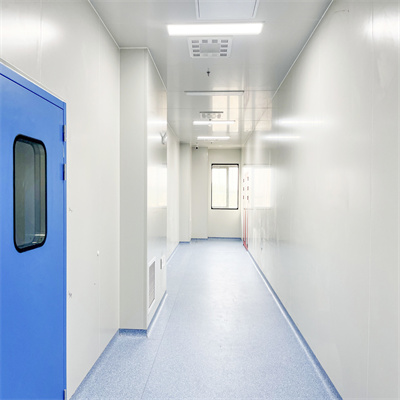
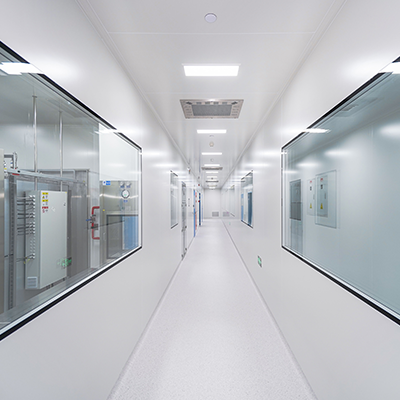
CLEANROOM PARTITION SYSTEM
A cleanroom partition system is an essential component of cleanroom design, providing the necessary separation and control of the cleanroom environment. Here's an overview of cleanroom partition systems and their key features:
Purpose: Cleanroom partition systems are used to create enclosed spaces within a cleanroom environment, providing a controlled area for specific processes or activities.
Construction: Cleanroom partitions are typically made of materials such as aluminum, steel, or composite panels with smooth, non-porous surfaces that are easy to clean and maintain. The panels are designed to fit together seamlessly, creating airtight and dust-free partitions.
Features:Modularity: Cleanroom partition systems are modular, allowing for easy installation, reconfiguration, and expansion as needed.
Airflow Control: Partitions are designed to maintain the desired airflow patterns within the cleanroom, ensuring proper contamination control.
Compatibility: Cleanroom partition systems are compatible with other cleanroom components, such as ceilings, floors, and doors, to create a complete cleanroom environment.
Customization: Partition systems can be customized to meet the specific requirements of the cleanroom, including size, shape, and finish.
Benefits:Contamination Control: Cleanroom partition systems help maintain the cleanliness and integrity of the cleanroom environment, preventing contamination of sensitive processes or products.
Flexibility: Modular cleanroom partitions offer flexibility in design and layout, allowing for easy adaptation to changing cleanroom requirements.
Cost-Effectiveness: Cleanroom partition systems are a cost-effective solution for creating cleanroom spaces, offering quick installation and reconfiguration options.
Applications:
Cleanroom partition systems are used in a variety of industries, including pharmaceuticals, biotechnology, electronics, and healthcare, where strict contamination control is required.
They are ideal for creating cleanrooms of various classifications, from ISO Class 1 to ISO Class 9, depending on the specific needs of the application.
Overall, cleanroom partition systems play a crucial role in maintaining the cleanliness and integrity of cleanroom environments, providing a controlled space for critical processes and activities.
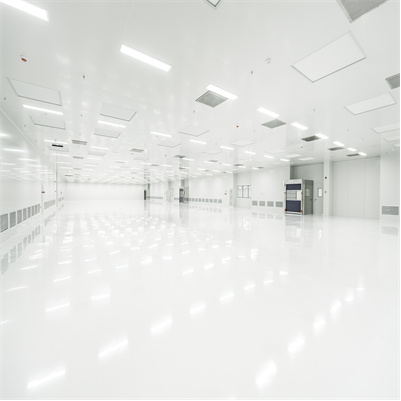
CLEANROOM CEILING
A cleanroom ceiling system is an essential component of cleanroom design, providing a controlled environment that meets specific cleanliness and safety standards. Here's an overview of cleanroom ceiling systems and their key features:
Purpose: Cleanroom ceiling systems are designed to create a sealed, controlled environment that prevents the ingress of contaminants and maintains the desired cleanliness level within the cleanroom.
Construction: Cleanroom ceiling systems are typically constructed using materials such as aluminum, steel, or composite panels with smooth, non-porous surfaces. The ceiling panels are designed to fit together seamlessly, creating a continuous and airtight barrier.
Features:HEPA Filters: Cleanroom ceiling systems often incorporate HEPA (High-Efficiency Particulate Air) filters to remove airborne particles and maintain the cleanliness of the air within the cleanroom.
Lighting: Cleanroom ceilings can be designed to accommodate lighting fixtures that meet the specific requirements of the cleanroom environment, including brightness, color rendering, and energy efficiency.
Accessibility: Cleanroom ceiling systems are designed to allow easy access to the plenum space above the ceiling for maintenance and servicing of equipment and utilities.
Fire Safety: Cleanroom ceiling systems are often fire-rated to ensure compliance with safety regulations and to provide added protection in case of fire.
Benefits:Contamination Control: Cleanroom ceiling systems help prevent the entry of contaminants into the cleanroom environment, ensuring the integrity of sensitive processes or products.
Airflow Control: Cleanroom ceilings are designed to facilitate proper airflow patterns within the cleanroom, ensuring that air is distributed evenly and efficiently.
Customization: Cleanroom ceiling systems can be customized to meet the specific requirements of the cleanroom, including size, shape, and configuration.
Applications:
Cleanroom ceiling systems are used in a variety of industries, including pharmaceuticals, biotechnology, electronics, and healthcare, where strict contamination control is required.
They are ideal for creating cleanrooms of various classifications, from ISO Class 1 to ISO Class 9, depending on the specific needs of the application.
Overall, cleanroom ceiling systems play a crucial role in maintaining the cleanliness and integrity of cleanroom environments, providing a controlled space for critical processes and activities.
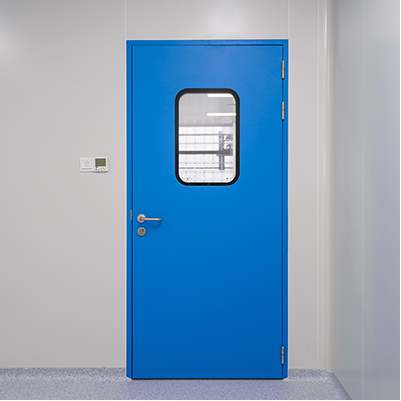
CLEANROON DOOR
A cleanroom door is a critical component of cleanroom design, providing a barrier to prevent the ingress of contaminants and maintain the integrity of the cleanroom environment. Here's an overview of cleanroom doors and their key features:
Purpose: Cleanroom doors are designed to provide a sealed, controlled entry point to the cleanroom, preventing the entry of contaminants and maintaining the desired cleanliness level within the cleanroom.
Construction: Cleanroom doors are typically constructed using materials such as stainless steel, aluminum, or other non-porous materials with smooth surfaces that are easy to clean and maintain. The doors are designed to fit tightly within the door frame, creating an airtight seal.
Features:Sealing: Cleanroom doors are equipped with gaskets or seals around the edges to ensure an airtight seal when the door is closed, preventing the entry of contaminants.
Material Compatibility: Cleanroom doors are designed to be compatible with the cleanroom environment, ensuring that they do not introduce contaminants or compromise the cleanliness of the space.
Operation: Cleanroom doors can be operated manually or automatically, depending on the specific requirements of the cleanroom. Automatic doors can be operated using sensors or push buttons, minimizing the need for physical contact.
Benefits:Contamination Control: Cleanroom doors help prevent the entry of contaminants into the cleanroom environment, ensuring the integrity of sensitive processes or products.
Accessibility: Cleanroom doors provide a secure and controlled entry point to the cleanroom, allowing authorized personnel and equipment to enter and exit as needed.
Customization: Cleanroom doors can be customized to meet the specific requirements of the cleanroom, including size, material, and operation.
Applications:
Cleanroom doors are used in a variety of industries, including pharmaceuticals, biotechnology, electronics, and healthcare, where strict contamination control is required.
They are ideal for creating cleanrooms of various classifications, from ISO Class 1 to ISO Class 9, depending on the specific needs of the application.
Overall, cleanroom doors play a crucial role in maintaining the cleanliness and integrity of cleanroom environments, providing a controlled entry point for personnel and equipment while preventing the entry of contaminants.
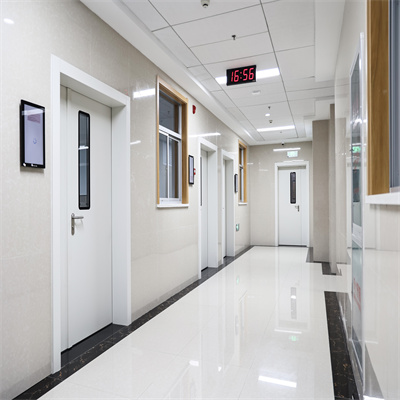
MEDICAL CLEANROOM DOOR
A medical cleanroom door is a specialized door designed for use in medical and healthcare facilities where cleanliness and hygiene are critical. Here's an overview of medical cleanroom doors and their key features:
Purpose: Medical cleanroom doors are designed to provide a barrier that prevents the ingress of contaminants, such as dust, bacteria, and other pathogens, into the cleanroom environment. They help maintain the cleanliness and sterility of the space, which is essential for medical procedures and patient safety.
Construction: Medical cleanroom doors are typically constructed using materials that are easy to clean and disinfect, such as stainless steel, aluminum, or composite panels. The doors are designed to be airtight and sealed to prevent the passage of contaminants.
Features:Sealing: Medical cleanroom doors are equipped with sealing mechanisms, such as gaskets or sweeps, to ensure an airtight seal when closed.
Smooth Surfaces: The surfaces of medical cleanroom doors are smooth and non-porous, making them easy to clean and disinfect.
Automation: Many medical cleanroom doors are automated, with sensors that detect movement and open the door automatically to reduce the risk of contamination from door handles.
Vision Panels: Some medical cleanroom doors are equipped with vision panels made of glass or transparent material to allow observation of the cleanroom environment without opening the door.
Benefits:Contamination Control: Medical cleanroom doors help maintain the cleanliness and sterility of the cleanroom environment, reducing the risk of infections and contamination.
Durability: Medical cleanroom doors are designed to withstand frequent cleaning and disinfection, ensuring long-term durability and reliability.
Regulatory Compliance: Medical cleanroom doors are designed to meet the strict cleanliness and hygiene standards required in medical and healthcare facilities, ensuring compliance with regulatory requirements.
Applications:
Medical cleanroom doors are used in a variety of healthcare settings, including hospitals, clinics, laboratories, and pharmaceutical facilities, where cleanliness and sterility are critical.
They are ideal for use in operating rooms, isolation rooms, cleanrooms, and other areas where strict contamination control is required.
CLEANROOM WINDOW
A cleanroom window is a specialized window designed for use in cleanroom environments where cleanliness and contamination control are critical. Here's an overview of cleanroom windows and their key features:
Purpose: Cleanroom windows provide a transparent barrier that allows observation of the cleanroom environment without compromising cleanliness. They help maintain the integrity of the cleanroom by preventing the ingress of contaminants.
Construction: Cleanroom windows are typically constructed using materials that are compatible with cleanroom requirements, such as tempered glass, acrylic, or polycarbonate. The frames are designed to be airtight and sealed to prevent the passage of contaminants.
Features:Sealing: Cleanroom windows are equipped with sealing mechanisms, such as gaskets or seals, to ensure an airtight seal with the surrounding walls or partitions.
Easy to Clean: The surfaces of cleanroom windows are smooth and non-porous, making them easy to clean and disinfect.
Visibility: Cleanroom windows are designed to provide clear visibility into the cleanroom environment, allowing for observation of processes and activities.
Size and Shape: Cleanroom windows can be customized to meet the specific requirements of the cleanroom, including size, shape, and location.
Benefits:Contamination Control: Cleanroom windows help maintain the cleanliness and integrity of the cleanroom environment, reducing the risk of contamination.
Visibility: Cleanroom windows allow for observation of processes and activities within the cleanroom without the need to enter the space, improving efficiency and safety.
Durability: Cleanroom windows are designed to withstand frequent cleaning and disinfection, ensuring long-term durability and reliability.
Applications:
Cleanroom windows are used in a variety of cleanroom settings, including pharmaceutical facilities, laboratories, manufacturing plants, and healthcare facilities, where cleanliness and contamination control are critical.
They are ideal for use in cleanrooms, observation rooms, and other areas where visibility into the cleanroom environment is required.
Overall, cleanroom windows play a crucial role in maintaining the cleanliness and integrity of cleanroom environments, providing a transparent barrier that allows for observation while preventing contamination.
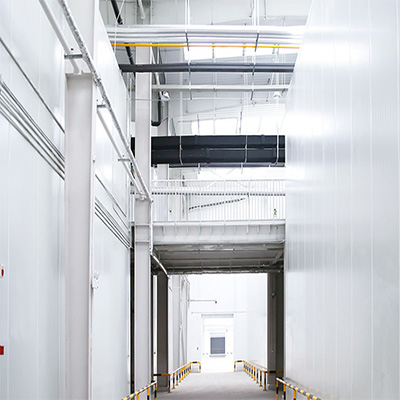
COLDSTORAGE PARTIOTION SYSTEM
A cold storage partition system is a set of specialized partitions designed for use in cold storage facilities. These partitions help create separate areas within the cold storage environment, providing organization, insulation, and temperature control. Here's an overview of cold storage partition systems and their key features:
Purpose: Cold storage partition systems are used to divide cold storage facilities into different sections for storage, processing, or other purposes. They help maintain the desired temperature and humidity levels within each section, ensuring the quality and safety of stored items.
Construction: Cold storage partition systems are typically made of materials that provide insulation and resistance to cold temperatures, such as insulated panels or curtains. The panels are designed to fit together seamlessly, creating airtight barriers that prevent the escape of cold air.
Features:Insulation: Cold storage partition systems are insulated to prevent heat transfer between different sections of the cold storage facility, helping maintain consistent temperatures.
Modularity: Partition systems are modular, allowing for easy installation, reconfiguration, and expansion as needed.
Durability: Cold storage partition systems are designed to withstand the harsh conditions of cold storage environments, including low temperatures and moisture.
Accessibility: Partition systems can be designed to allow for easy access between different sections of the cold storage facility, facilitating the movement of goods and personnel.
Benefits:Temperature Control: Cold storage partition systems help maintain the desired temperature within each section of the cold storage facility, ensuring the quality and safety of stored items.
Organization: Partition systems help organize the cold storage facility into different sections for storage, processing, or other purposes, improving efficiency and productivity.
Energy Efficiency: By preventing heat transfer between sections, cold storage partition systems can help reduce energy costs associated with cooling.
Applications:
Cold storage partition systems are used in a variety of industries, including food and beverage, pharmaceuticals, and logistics, where temperature control is critical.
They are ideal for dividing cold storage facilities into different sections for storage, processing, packaging, or other purposes.
Overall, cold storage partition systems play a crucial role in maintaining the quality and safety of stored items in cold storage facilities, providing organization, insulation, and temperature control.
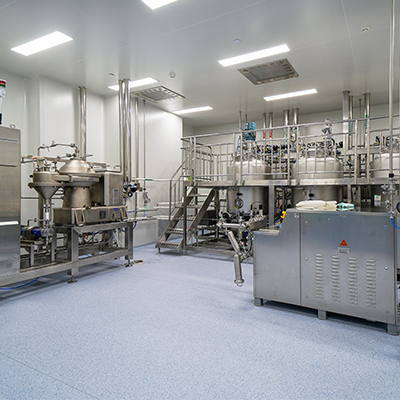
CLEANROOM EQUIPMENT
Cleanroom equipment refers to a variety of specialized tools, devices, and systems used in cleanroom environments to maintain cleanliness, control contamination, and ensure the integrity of sensitive processes or products. Here are some common types of cleanroom equipment:
Air Handling Systems: These systems control the airflow, temperature, and humidity within the cleanroom to maintain the desired cleanliness level.
HEPA Filters: High-Efficiency Particulate Air (HEPA) filters are used to remove airborne particles, ensuring the air in the cleanroom is clean and free of contaminants.
Cleanroom Benches and Tables: These are specially designed furniture items with smooth surfaces that are easy to clean and disinfect, minimizing the risk of contamination.
Gloves and Garments: Cleanroom-compatible gloves, suits, and other garments are worn by personnel to prevent contamination of products or processes.
Cleaning Supplies: Cleanroom-specific cleaning supplies, such as wipes, mops, and disinfectants, are used to clean surfaces and equipment within the cleanroom.
Pass-Through Chambers: These chambers allow for the transfer of materials and equipment into and out of the cleanroom without compromising cleanliness.
Monitoring and Control Systems: These systems monitor parameters such as temperature, humidity, particle count, and air pressure to ensure compliance with cleanliness standards.
Storage Solutions: Cleanroom-compatible storage cabinets, shelves, and containers are used to store materials and equipment in a clean and organized manner.
Process Equipment: Equipment used in cleanroom processes, such as semiconductor manufacturing or pharmaceutical production, is designed to meet cleanliness requirements.
Personnel Entry Systems: These systems, such as air showers and gowning rooms, help ensure that personnel entering the cleanroom are properly dressed and free of contaminants.
Overall, cleanroom equipment is essential for maintaining the cleanliness and integrity of cleanroom environments, ensuring that sensitive processes or products are protected from contamination.